Despite considerable resistance from residents near construction sites, the global artificial intelligence boom is projected to reach a total of $31.6 trillion by 2050, according to a new report from PwC, and possibly as much as $50 trillion.
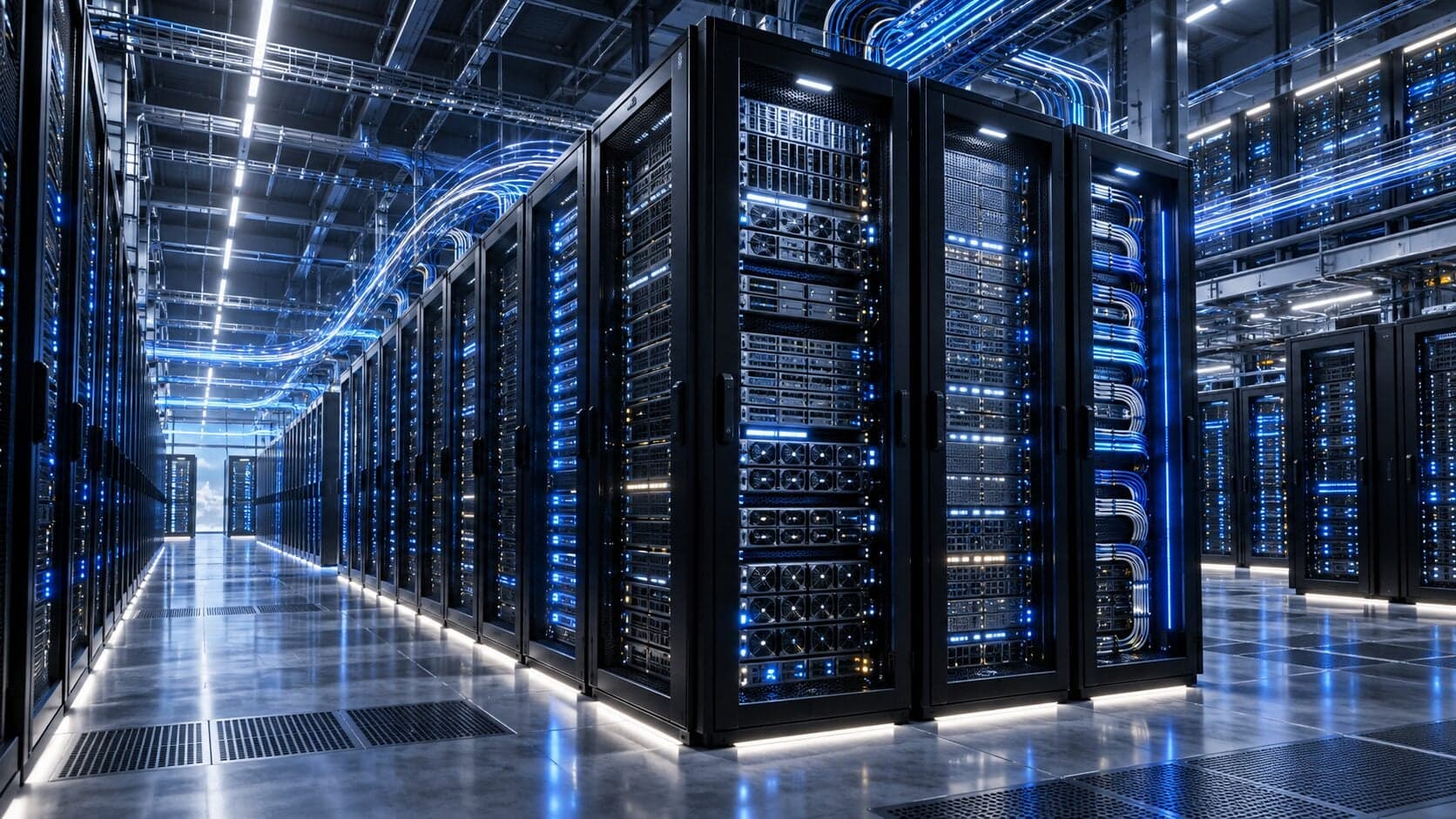
PwC’s Global Data Centre Outlook estimates that annual spending on data center infrastructure will increase from roughly $800 billion in 2026 to $1.8 trillion by 2050. Unlike previous infrastructure revolutions such as factories, much of that spending will go toward facilities with short lifespans rather than decades of productivity.
That’s because data centers are in a constant state of upgrade. Unlike a factory, where the same equipment is deployed for decades, data center operators are expected to purchase new GPUs and related infrastructure every four to six years thanks to technological advancement (or planned obsolescence, depending on your point of view).
PwC estimates that information and communications technology equipment will account for approximately 70% of AI infrastructure investment today, rising to 93% by 2050.
That reflects the rapid pace of AI hardware development. GPUs, CPUs, networking equipment and other components can become obsolete far faster than traditional infrastructure such as railways, electrical grids, and telecommunications networks.
Intel, Nvidia, AMD and other chipmakers are introducing new generations of processors at a pace measured in years rather than decades. Now just because they build them doesn’t mean the customers will come. But with each generation of processors comes price performance improvements, and any improvement in power efficiency will go to the bottom line for a hyperscaler or data center operator. So there is legitimate incentive beyond performance to embrace new technology.
However, that new gear does not come cheap. A constant cycle of upgrades means a potentially enormous recurring capital-spending market for semiconductor manufacturers, server vendors, networking companies, memory suppliers and the businesses providing power and cooling infrastructure.
That’s why PwC’s figures are so enormous; they represent cumulative spending through 2050 rather than simply the initial cost of constructing AI data centers or annual costs. In that sense, the AI infrastructure cycle could prove fundamentally different from earlier infrastructure revolutions.
The U.S. is projected to receive the largest share of global AI infrastructure investment, with approximately $15.1 trillion, or about 48%, of cumulative spending through 2050. Asia-Pacific is expected to attract another $8.2 trillion, driven in large part by China and India, while Europe is projected to account for approximately $5.6 trillion.
The geographic distribution will depend heavily on something increasingly scarce: electricity. PwC identifies access to reliable, affordable and sufficiently low-carbon electricity as the most important factor determining where AI infrastructure will be built.
AI data centers require enormous amounts of electricity, and the industry’s expansion is already placing pressure on power grids in several regions. Other factors—including connectivity, security, regulatory certainty, community acceptance and access to GPUs—will also influence where investment ultimately flows.
The electricity problem could become particularly acute in the United States. Separate forecasts have projected that data centers could consume roughly 20% of U.S. electricity by 2035 as AI workloads expand. That won’t be tolerated. Already there are numerous motions within certain states to require data center operators to provide their own power rather than go off the public grid.
That is creating incentives for operators to secure dedicated power supplies and explore alternatives ranging from natural gas to nuclear and geothermal energy.
A glaring omission in the PwC report is the impact of water, which has become an increasingly controversial issue surrounding data centers and their considerable consumption of water. Data centers in drought-stricken areas have been consuming vast quantities of water, to the anger of residents in the area and this has led to severe pushback for new data center construction.