Kioxia and SanDisk have introduced their 9th-generation 2Tb QLC 3D flash memory, combining an updated CMOS design with their existing memory-array technology.
The new architecture is intended to increase storage performance while improving power efficiency and allowing NAND technology to scale more cost-effectively. It is designed, not surprisingly, to address the rapidly expanding storage requirements of AI and data-intensive infrastructure.
The companies said the technology delivers a 4.8Gb/s NAND interface, a 33% increase over their 8th-generation 2Tb QLC flash. It also incorporates a six-plane architecture that increases read and write bandwidth while reducing the power required for those operations.
The challenge with QLC is that while it has the highest capacity of flash storage, it also wears out the fastest and increasing the lifespan is important, especially with something that is frequently written to disk like AI data.
When you think of AI, the first technology that comes to mind is GPUs. But lately, there has been greater concern around storage because of the massive size of large language models. Storage capacity and data movement have become as important as data processing but I haven’t received as much attention.
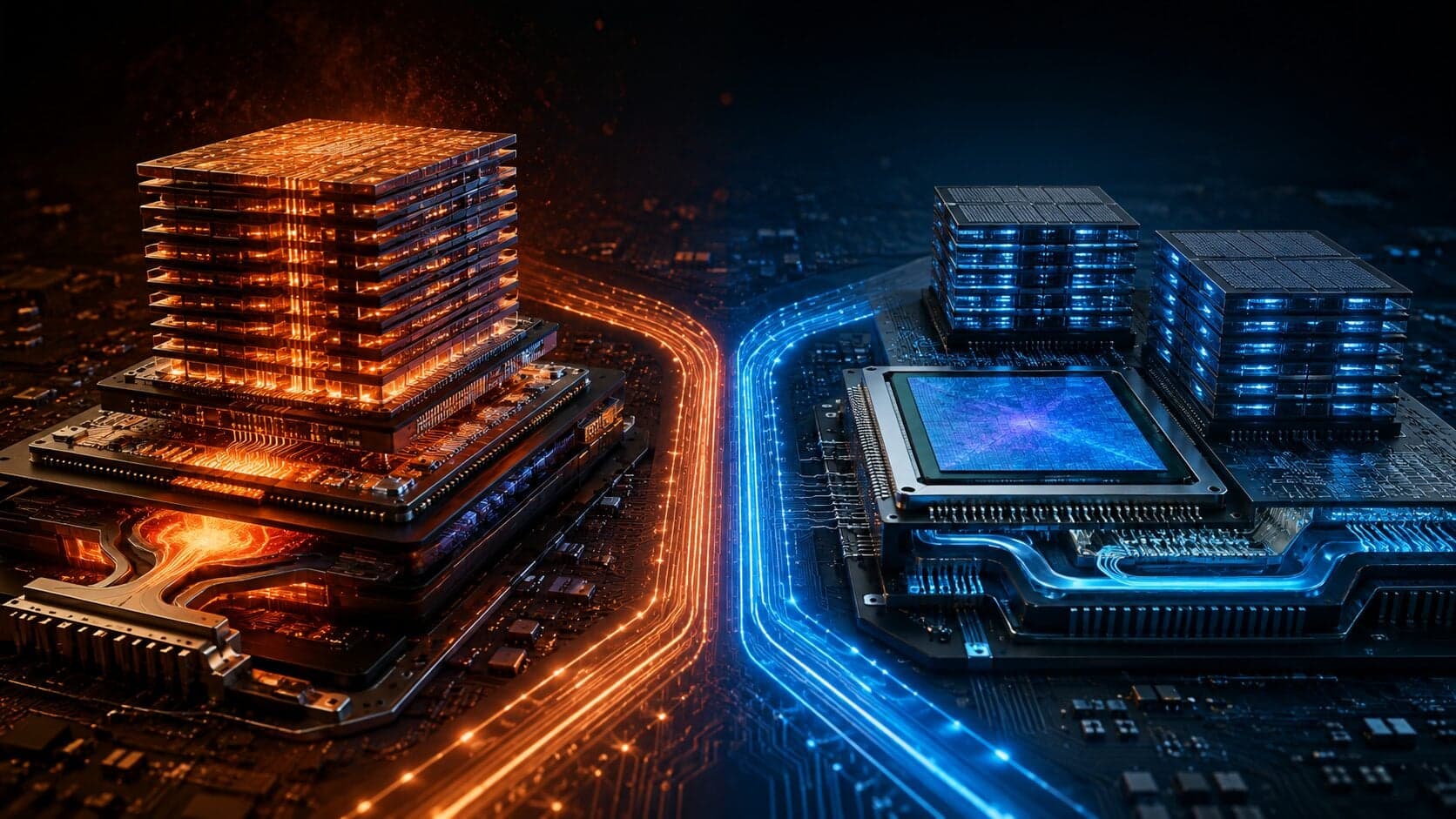
The new flash technology uses Kioxia and SanDisk’s CMOS directly bonded to Array (CBA) architecture. Under the approach, the CMOS logic and memory array can be manufactured separately and then bonded together.
That separation gives the companies greater flexibility to advance the logic and memory portions independently rather than requiring both to follow the same manufacturing roadmap.
Taken together, the developments illustrate how NAND manufacturers are attempting to balance three competing requirements of AI infrastructure: higher capacity, higher bandwidth and lower power consumption.
For hyperscale cloud providers and AI operators, improvements in flash performance can also help reduce storage bottlenecks elsewhere in the system. As GPU clusters become increasingly powerful, keeping those processors supplied with data is becoming a system-level challenge extending well beyond compute and memory.