NVIDIA is investing $3.5 billion in Taiwanese chip designer MediaTek, a deal designed to keep NVIDIA technology central to AI data centers even as hyperscalers develop more of their own processors.
For NVIDIA, the transaction is its largest direct investment outside the U.S. Alphabet also participated in the offering, although MediaTek did not disclose the size of its investment.
In the agreement, MediaTek will adopt NVIDIA’s NVLink Fusion and NVHBM technologies as it expands its custom AI chip business. The technologies allow specialized processors to connect with NVIDIA-based computing and networking infrastructure, which helps promote these NVIDIA products across the data center market.
Keeping NVIDIA at the Center of AI Infrastructure
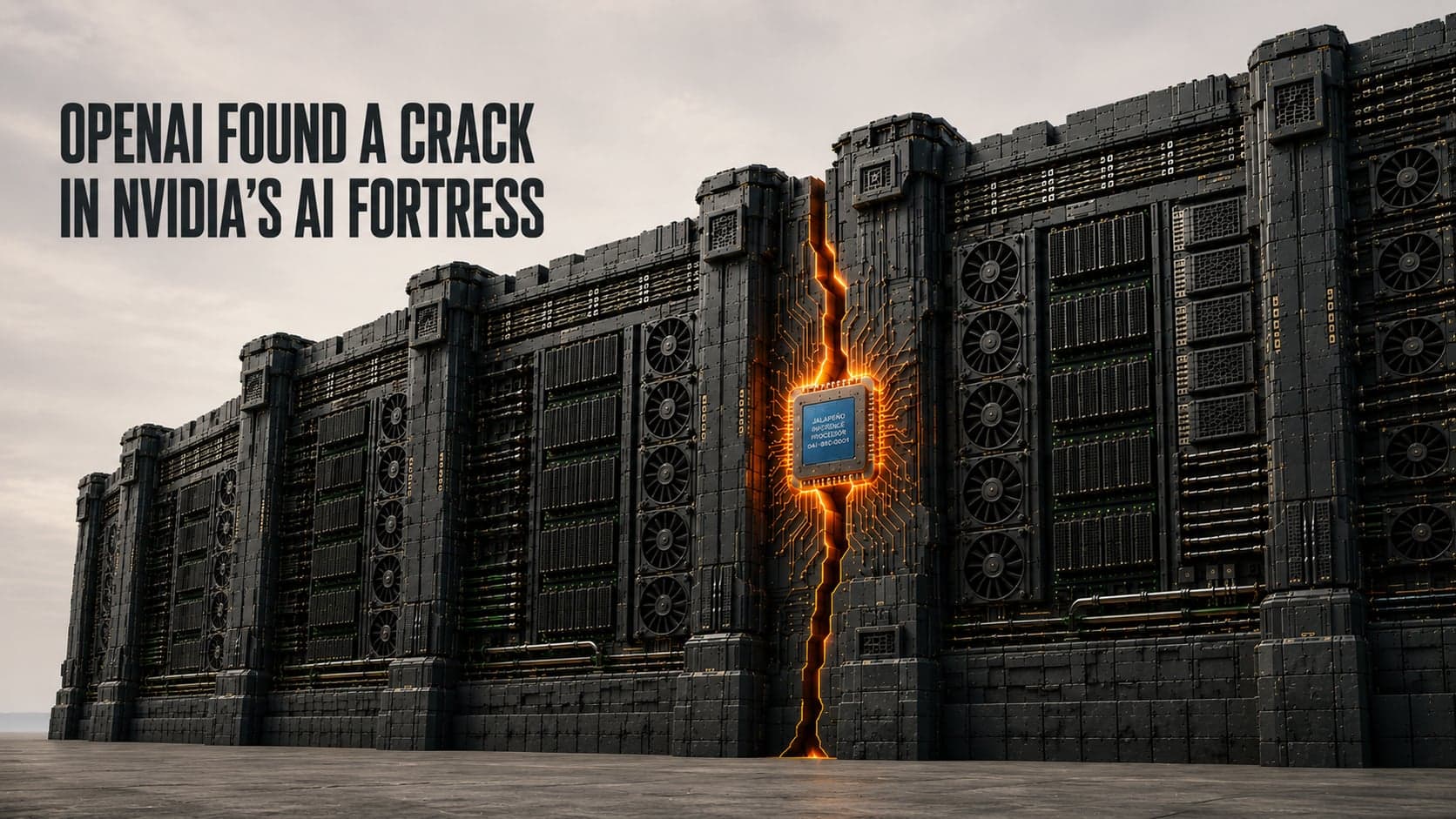
Large cloud providers and AI companies are now actively developing custom silicon to optimize chips for specific workloads and reduce their reliance on NVIDIA GPUs. Amazon, Google and Microsoft are among the major tech companies developing in-house processors.
NVIDIA’s strategy is to remain essential to those hyperscalers even when some of the processors are supplied by another vendor. The company does not need to manufacture every AI processor if competing and custom chips still connect through NVIDIA technology.
NVLink Fusion is core to that approach. It enables custom processors to operate alongside NVIDIA hardware within a common data center architecture. Instead of competing only to supply every accelerator, NVIDIA can provide networking, memory connectivity and other infrastructure that ties a large AI system together.
MediaTek brings an ambitious custom silicon operation to the partnership. Best known for processors used in smartphones and other consumer devices, the company has been expanding into data center AI chips. It expects that business to generate about $2 billion in revenue this year and is targeting 15% of an AI chip segment it estimates will reach $80 billion next year.
The companies are also extending their work beyond data centers. Their collaboration includes AI computing for PCs and software-defined vehicles, building on existing work involving NVIDIA’s desktop and PC initiatives.
The MediaTek investment also adds to scrutiny of NVIDIA’s growing financial ties throughout the AI sector. Critics have questioned whether investments involving companies that buy or support NVIDIA technology can create circular economic relationships. NVIDIA CEO Jensen Huang rejected that characterization in discussing MediaTek, pointing to the Taiwanese company’s established and profitable business.
NVIDIA has strong incentives to broaden its position beyond GPUs. Its accelerators remain the dominant hardware for AI training and inference, but its largest customers have both the money and technical expertise to build alternatives. NVIDIA recently forecast revenue growth of 70% next year, demonstrating that for now, demand for its technology remains strong despite those competitive efforts.