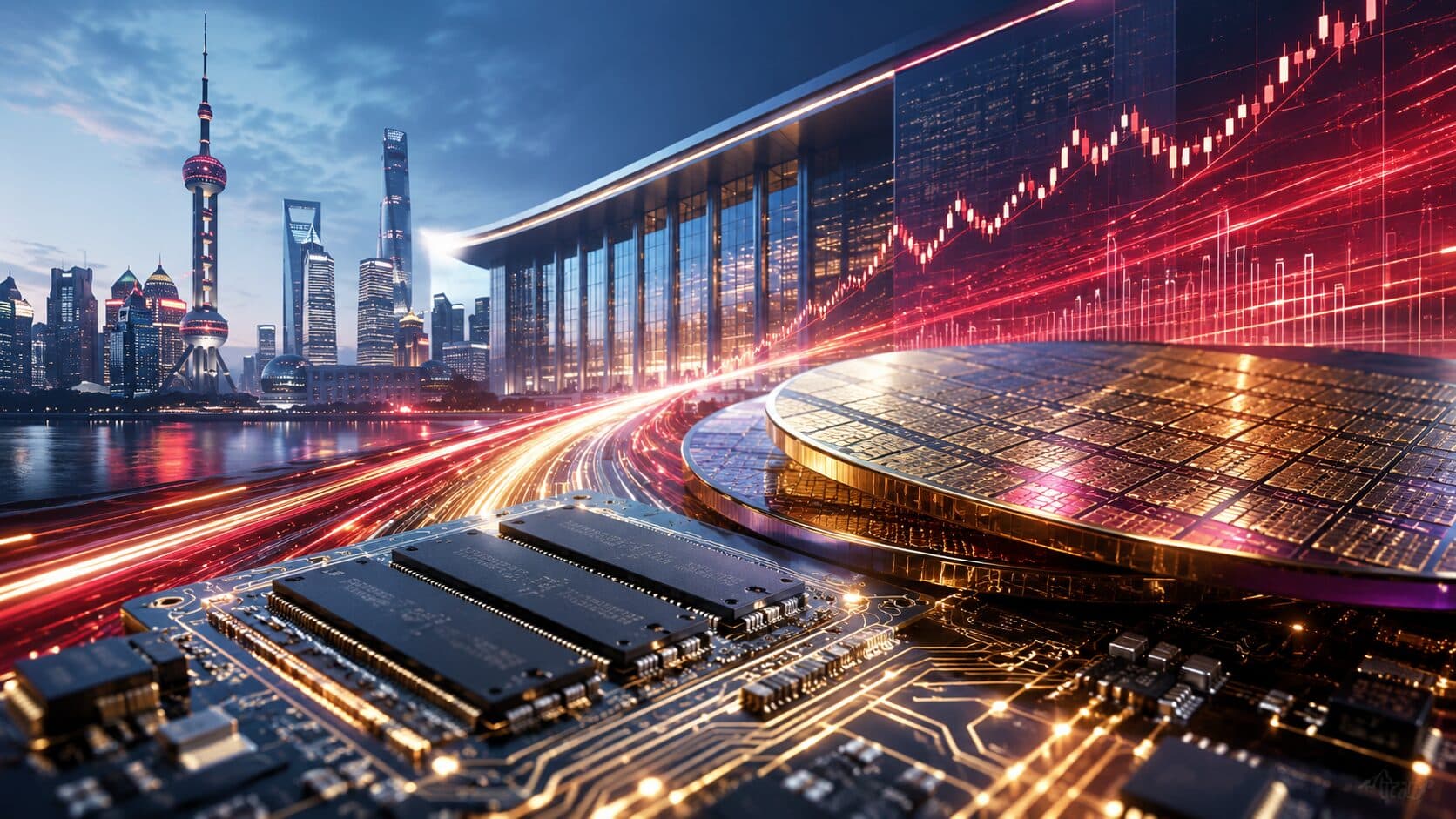
The tech sector has been grappling with the challenges of a memory chip shortage with the expectation that it will be relatively short-lived. Now it appears that supply constraints could persist for much of the decade, raising costs and complicating the rollout of next-gen AI systems.
According to industry estimates, production of semiconductor wafers, the foundational material used to manufacture chips, lags demand by more than 20%. That gap is proving difficult to close, even as leading manufacturers accelerate investment in new facilities.
The problem now appears structural rather than temporary. Expanding memory production requires years of capital-intensive development, and the shift toward more advanced forms of memory has added complexity. High-bandwidth memory (HBM), which is increasingly used in AI systems, is particularly challenging to produce due to its layered design and precision manufacturing requirements.
Rapid Growth
Industry forecasts suggest global spending on AI-related computing could reach $650 billion by 2026, highlighting the scale of the intense investment cycle now underway.
While processors perform calculations, memory stores and feeds the vast datasets required for AI workloads. As models grow larger and more data-intensive, the need for faster and denser memory has intensified. Newer AI chips are designed to handle enormous data throughput, and each successive generation requires significantly more memory than the last.
This shift has led manufacturers to prioritize high-performance memory products, often at the expense of more conventional components used in consumer electronics. The result is a tightening supply for devices such as smartphones, laptops, and automobiles, where memory is a core component.
Prices for memory components have risen, and those increases are beginning to filter through to end products. Device makers, facing higher input costs, are boosting prices accordingly. Corporate planning is being affected, as companies reassess timelines for product launches and AI deployments.
The industry’s structure adds another layer of constraint. A small group of companies, Samsung Electronics, SK Hynix, and Micron Technology, dominates global memory production. All three are investing aggressively to lift capacity, but the technical demands of semiconductor manufacturing means this can’t be achieved overnight.
Memory Shortage is Becoming a Defining Feature
Shares of major memory producers have risen sharply in recent months, driven by expectations of sustained demand and constrained supply. For investors, the shortage has created opportunity. For the broader technology ecosystem, it represents a growing bottleneck.
As a result, the memory shortage is becoming a defining feature of the AI era. It highlights an irony of today’s tech scene: advances in one part of the tech stack can expose vulnerabilities elsewhere. In any case, as companies build more powerful systems, memory supply may be one of the most significant factors shaping the pace of innovation.
SHARE THIS STORY
Originally published by Techstrong.IT. Republished with attribution.