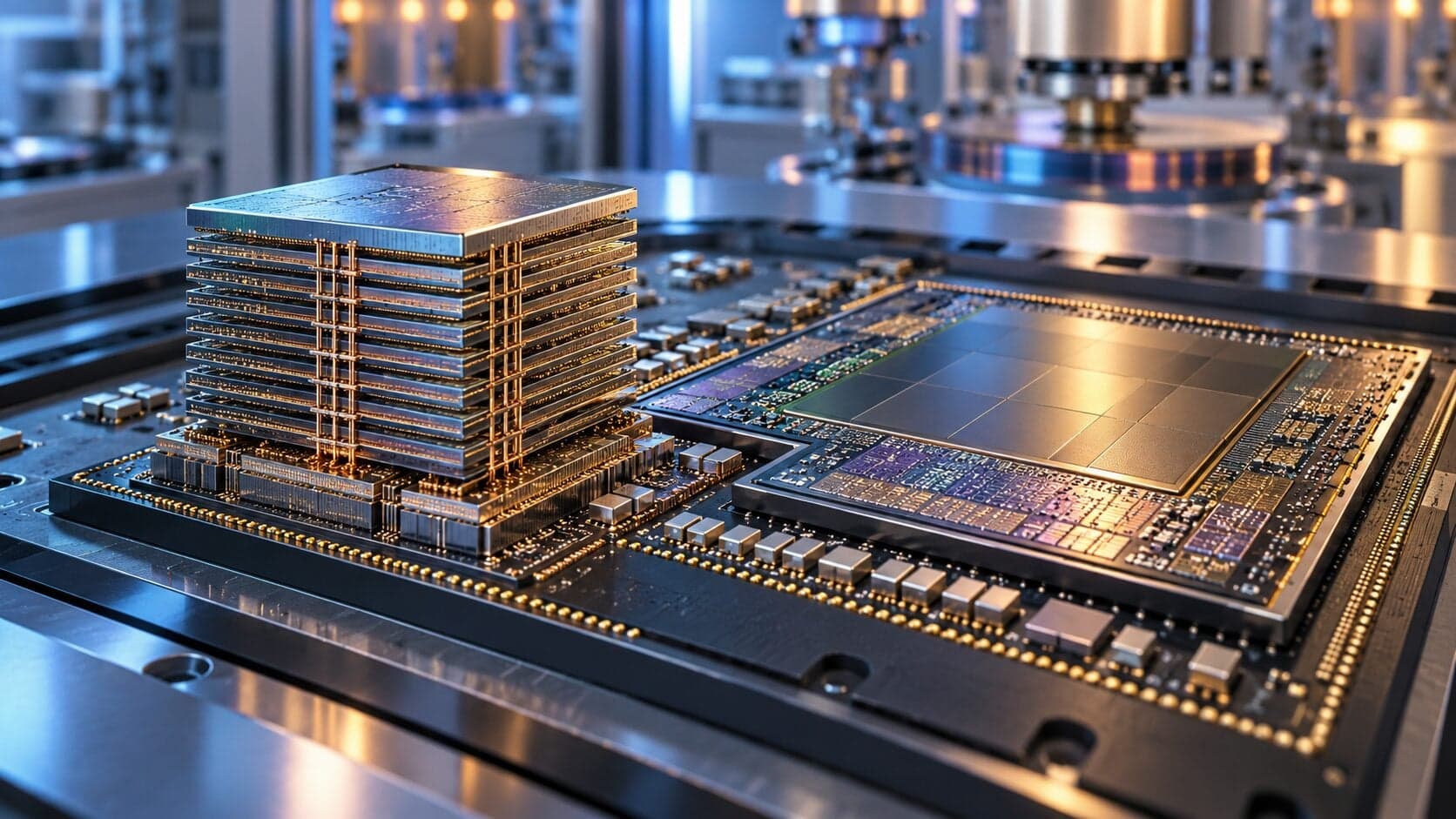
Seeking to erode NVIDIA Corp.’s dominance in artificial intelligence (AI), Amazon.com Inc. has introduced a new software tool designed to allow AI models to run on its custom chips with minimal code modifications.
The software, named TorchNeuron, lets developers execute code written in PyTorch, the industry’s most popular open-source AI framework, on Amazon’s proprietary Trainium chips using a simple configuration change.
Developed by Amazon’s Annapurna Labs chip unit, the software will be publicly released as a free, open-source project in conjunction with the PyTorch Conference in San Jose, Calif.
The move targets NVIDIA’s most formidable competitive advantage: its software ecosystem, CUDA. For over a decade, CUDA has optimized PyTorch to run seamlessly on NVIDIA graphics processing units (GPUs). Because translating code to alternative hardware historically required months of costly engineering work, many companies remained locked into NVIDIA’s ecosystem despite rising costs and supply constraints.
“This has been about meeting customers where they’re at,” said Colin Brace, vice president of technology software at Annapurna Labs. “If you know PyTorch, then you know Trainium.”
Analysts say Amazon is addressing the software effort that can keep customers from considering a different chip.
“A cheaper chip is not necessarily a cheaper workload if developers spend months adapting their code to use it,” said Stephanie Walter, practice leader for AI Stack & Enterprise Application Development at HyperFRAME Research. “TorchNeuron tackles that adoption barrier by bringing Trainium into the PyTorch workflows teams already use. That gives more developers a practical reason to evaluate Amazon’s chips.”
“But getting code to run and getting it to run efficiently are different milestones,” Walter said. “Customers still need to test model compatibility, performance, and operating costs on their own workloads. If that holds up, Amazon has a stronger argument for Trainium than hardware pricing alone.”
Historically, running PyTorch on Trainium required developers to adapt their software to specialized Amazon programming interfaces. TorchNeuron eliminates that friction by allowing existing codebases to recognize Trainium automatically. To ensure broad compatibility, Amazon runs nightly automated tests across more than 100,000 models hosted on Hugging Face, the popular open-source AI platform.
Amazon is not alone in its efforts to challenge NVIDIA’s software moat. Fellow cloud giants are making similar moves; Google is developing TorchTPU to natively support PyTorch on its Tensor Processing Units (TPUs), while Microsoft Corp. recently announced plans to transition most of its internal AI services to its homegrown Maia chips.
Additionally, Amazon is reportedly in talks to acquire Decart, an AI software startup that helps migrate models off NVIDIA hardware, in a deal valued at approximately $7 billion.
The effort to democratize chip access is already showing commercial traction. Amazon revealed that more than 30 early customers across robotics, voice AI, and spatial computing have utilized TorchNeuron during its private beta. Deepgram, a speech-AI startup, reported that Trainium processed roughly 60% more audio per dollar compared to its previous GPU infrastructure.
Internally, Amazon’s Prime Video team leveraged the software to build Prime 360, an AI system running on Trainium that reconstructs live NBA plays into interactive 3-D replays.
Major AI players have also committed heavy resources to the platform. Anthropic uses Trainium to train and serve its Claude models, while OpenAI recently agreed to utilize two gigawatts of Trainium capacity as part of a broader $50 billion investment agreement with Amazon.
Amazon CEO Andy Jassy noted in his annual shareholder letter that the company’s chip business, which includes Trainium and its Graviton general-purpose processors, exceeds a $20 billion annual revenue run rate.
While analysts emphasize that CUDA’s mature ecosystem means NVIDIA’s market lead will not vanish overnight, lowering the technical switching barrier gives Amazon Web Services (AWS) significant leverage. By removing software friction, Amazon aims to turn casual experimentation into sustained demand for its silicon.