Advanced Micro Devices has acquired memory optimization startup MEXT to strengthen its ability to address memory bottlenecks in AI infrastructure.
The acquisition expands AMD’s data center portfolio with software technology that enables more efficient use of memory resources, helping enterprises run larger AI workloads without requiring greater investments in expensive DRAM. Financial terms of the deal were not disclosed.
AI deployments are placing unprecedented pressure on data center memory capacity: LLMs, machine learning training, inference systems, and data analytics all require large amounts of memory. In many environments, memory availability has become a greater challenge than processor performance.
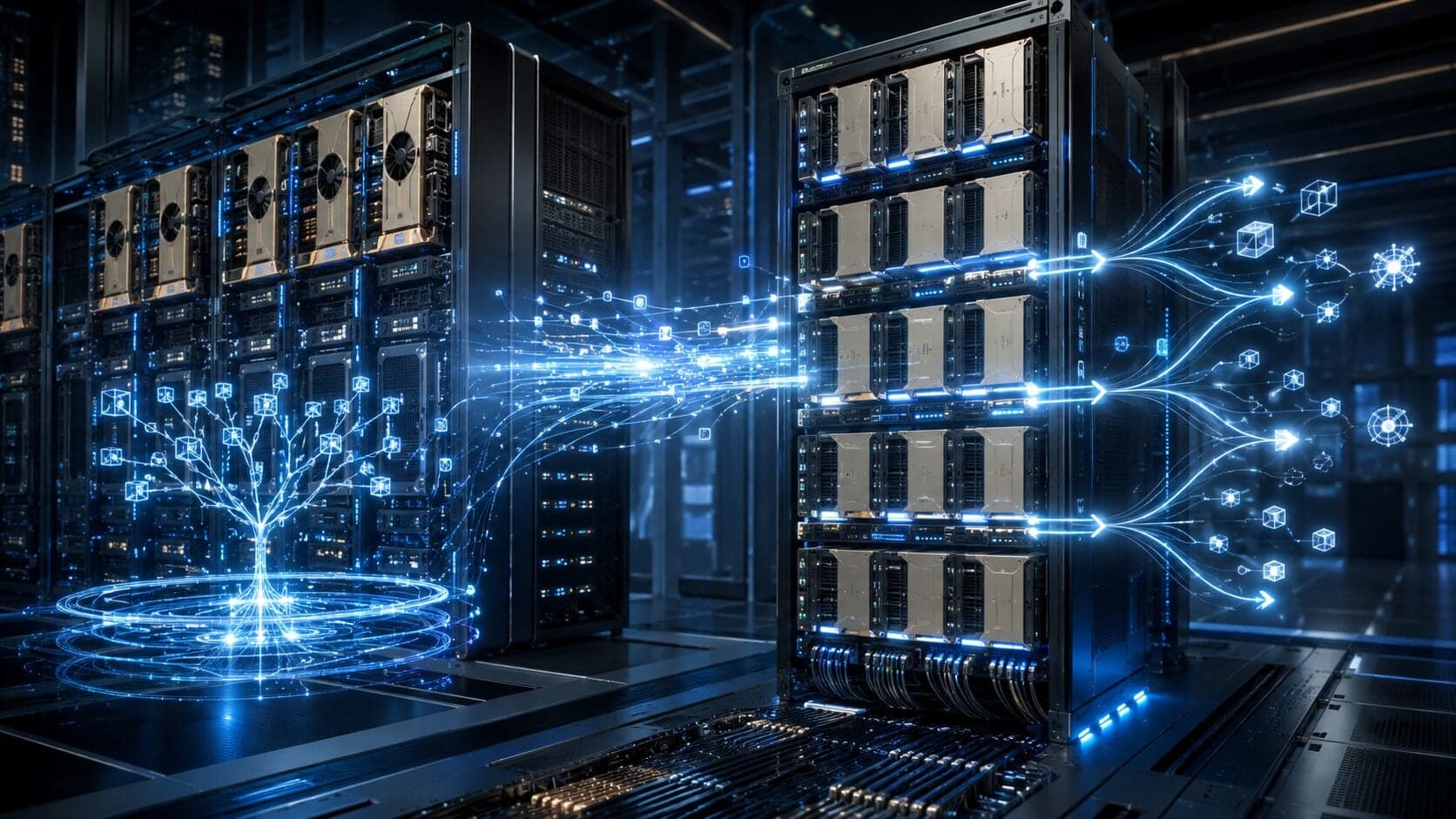
MEXT developed a software-driven memory tiering platform that uses AI to manage how data is stored and retrieved. Rather than keeping all data in DRAM, the company’s technology identifies information that is accessed less frequently and shifts it to NAND flash storage, which is substantially less expensive than traditional memory.
What distinguishes the platform is its predictive memory engine. The software continuously analyzes application behavior and memory access patterns, then anticipates which data will likely be needed next. Information stored on flash devices can be moved back into DRAM before applications request it, helping preserve performance while expanding the effective memory available to workloads.
The result is a system that allows flash storage to function more like main memory from the perspective of applications and operating systems. For data center operators, that could translate into improved utilization of existing hardware and reduced dependence on additional DRAM purchases.
“MEXT represents a unique capability to better manage the memory capacity of an increasingly memory-starved computing marketplace by deploying flash memory, which is generally very slow, to replace some of the DRAM used in AI compute,” Jack Gold, Principal Analyst at J. Gold Associates, told Techstrong Semi.
“It’s a niche area of memory management that could be beneficial given the scarcity of HBM [high-bandwidth memory] that AI data centers need to operate, and the long delivery times and escalating costs now being faced by the marketplace due to memory shortages.”
Integrate Across Data Center Offerings
AMD said it plans to integrate MEXT’s technology across its data center offerings, which already include EPYC processors, Instinct AI accelerators, networking technologies and software platforms. The company has been promoting itself as a supplier of complete AI infrastructure stacks rather than individual components.
The deal brings a team of engineers with expertise in memory architecture, infrastructure software and enterprise computing environments. That knowledge could prove valuable as AMD works to bolster its position against competitors in the rapidly expanding AI infrastructure market.
The acquisition complements other recent AMD initiatives aimed at broadening its AI offerings. The company recently introduced its Ryzen AI Halo developer platform, designed to help developers run large AI models locally on high-performance hardware instead of relying exclusively on the cloud. Together, the two announcements illustrate AMD’s strategy of supporting both AI development and AI deployment through a combination of hardware and software technologies.
Industry analysts view the transaction primarily as a technology acquisition rather than a near-term revenue driver. The addition of MEXT’s software capabilities gives AMD another tool for addressing efficiency challenges that customers now face as AI workloads scale.