Advanced Micro Devices (AMD) is launching a powerful new lineup of artificial intelligence (AI) data center hardware on Thursday, directly targeting market leader NVIDIA Corp.
The news, unveiled at an industry event in San Francisco, centers around AMD’s efforts to capture market share in both AI training and inference, the computational work behind processing queries for popular chatbots and AI agents.
AMD formally debuted Helios, its first-generation server rack-scale system. Designed to challenge NVIDIA’s integrated rack solutions, Helios combines Instinct MI455X GPUs and EPYC Venice CPUs, Pensando networking chips, and integrated ROCm software.
AMD is also officially introducing its next-generation Venice Central Processing Unit (CPU) for data centers.
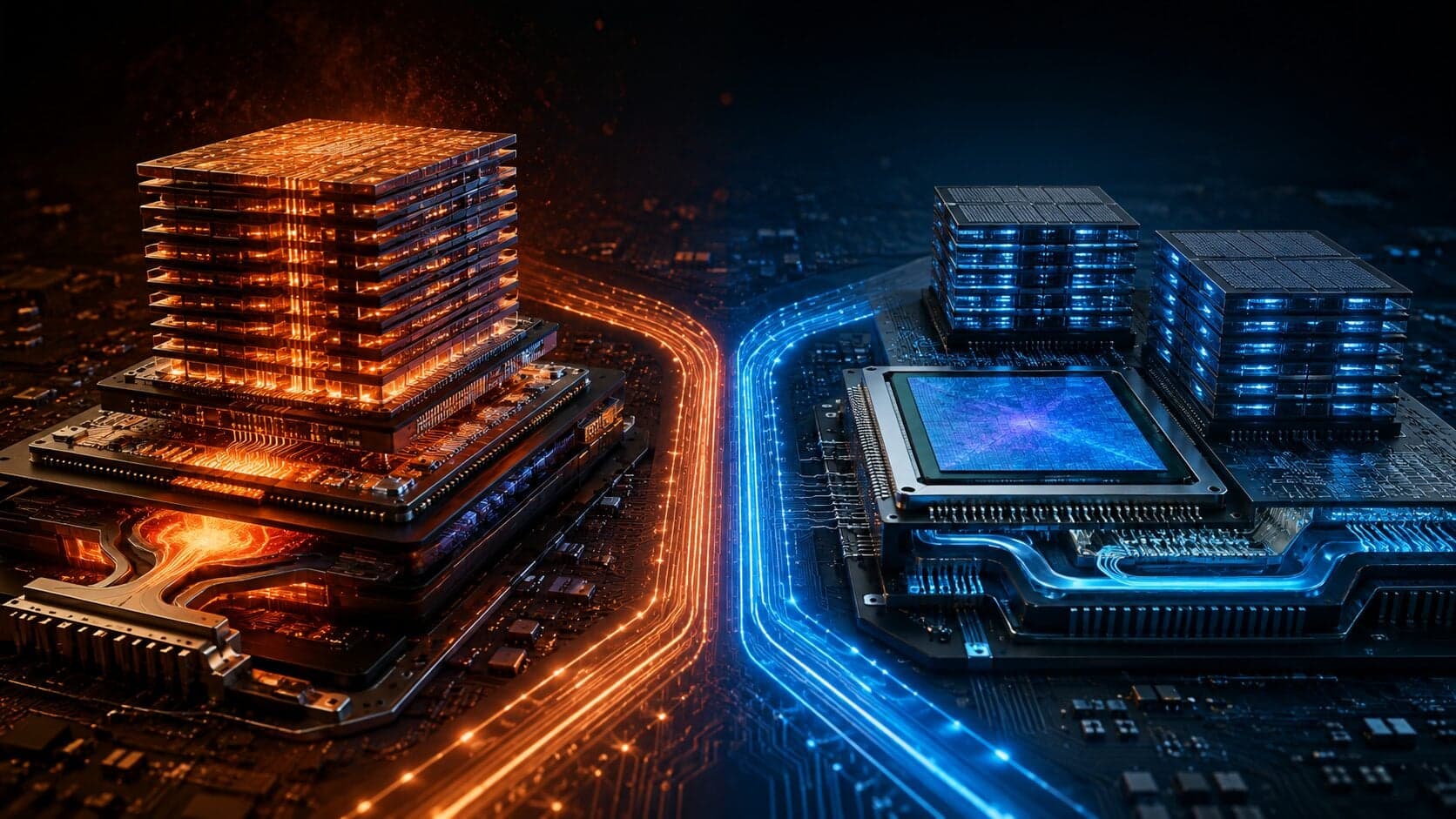
Described by AMD CEO Lisa Su as the tech industry’s “highest performance AI rack,” Helios is built to train and execute the world’s most demanding frontier models. According to early performance benchmarks reported by The Register, the new architecture surpasses NVIDIA’s flagship Vera Rubin systems across several key metrics, positioning AMD as a formidable challenger in a market previously dominated by NVIDIA’s Grace Blackwell and Vera Rubin platforms.
The momentum behind Helios is already accelerating, with major tech giants lining up to deploy the hardware at gigawatt scale. Originally unveiled in 2025 and showcased at CES earlier this year, the system has secured commitments from prominent industry leaders including Meta Platforms Inc., Oracle Corp., and OpenAI. Microsoft CEO Satya Nadella confirmed earlier this week that the company plans to integrate Helios into its Azure cloud infrastructure, signaling strong enterprise confidence in the platform’s capabilities.
The move comes as NVIDIA continues to guard its market dominance, which analysts at The Futurum Group estimate sits at upward of 95% for data center GPUs, compared to AMD’s roughly 4.5%.
Earlier this week, NVIDIA released technical details highlighting its upcoming Vera CPU and Rubin GPU platform, emphasizing energy efficiency for AI agent workloads.
AMD’s hardware strategy is backed by massive commercial commitments from leading AI research firms and cloud providers.
AMD announced plans to sell up to two gigawatts of its upcoming Instinct MI450 Series GPUs to Anthropic starting in the first half of 2027. The agreement includes a multi-year engineering collaboration to optimize Anthropic’s Claude AI for AMD hardware, as well as a strategic equity investment of up to $5 billion in the AI lab by AMD.
Microsoft Corp. has expanded its partnership with AMD to deploy Helios racks on Azure to power frontier model inference, with initial shipments expected in the second half of 2026.
The announcements follow an earlier multiyear deal with OpenAI expected to generate tens of billions in annual revenue, while offering the ChatGPT creator an option to acquire up to a 10% stake in AMD.
“Access to compute is central to keeping Claude at the frontier and meeting demand from our customers,” said Tom Brown, co-founder and chief compute officer at Anthropic. “By partnering with AMD across the stack, we are securing the capacity we need and optimizing it for training and serving Claude.”
Su said the Anthropic partnership “brings together Anthropic’s leadership in frontier AI with the full strength of AMD high-performance computing.”
AMD enters the hardware launch with strong financial momentum in its server division. The company’s data center segment posted $5.78 billion in revenue in Q1 2026, marking a 57% year-over-year increase driven by strong demand for its EPYC processors and Instinct GPU product lines.