Alphabet Inc.’s Google is significantly broadening its custom semiconductor lineup with two new variations of its artificial intelligence (AI) processors in a bid to capture a larger share of a market dominated by NVIDIA Corp.
The search engine giant is introducing the TPU 8tx and TPU 8i Max, reconfigured variants of its existing Tensor Processing Units (TPUs) tailored for enterprise workloads. Rather than building entirely new silicon from the ground up, Google has optimized these systems to address pressing security requirements and compute-heavy tasks such as complex mathematics, drug discovery, and coding applications.
The TPU 8tx, developed in collaboration with Advanced Micro Devices Inc., is engineered for confidential computing. It encrypts sensitive data directly at the silicon level, specifically targeting heavily regulated sectors and government agencies.
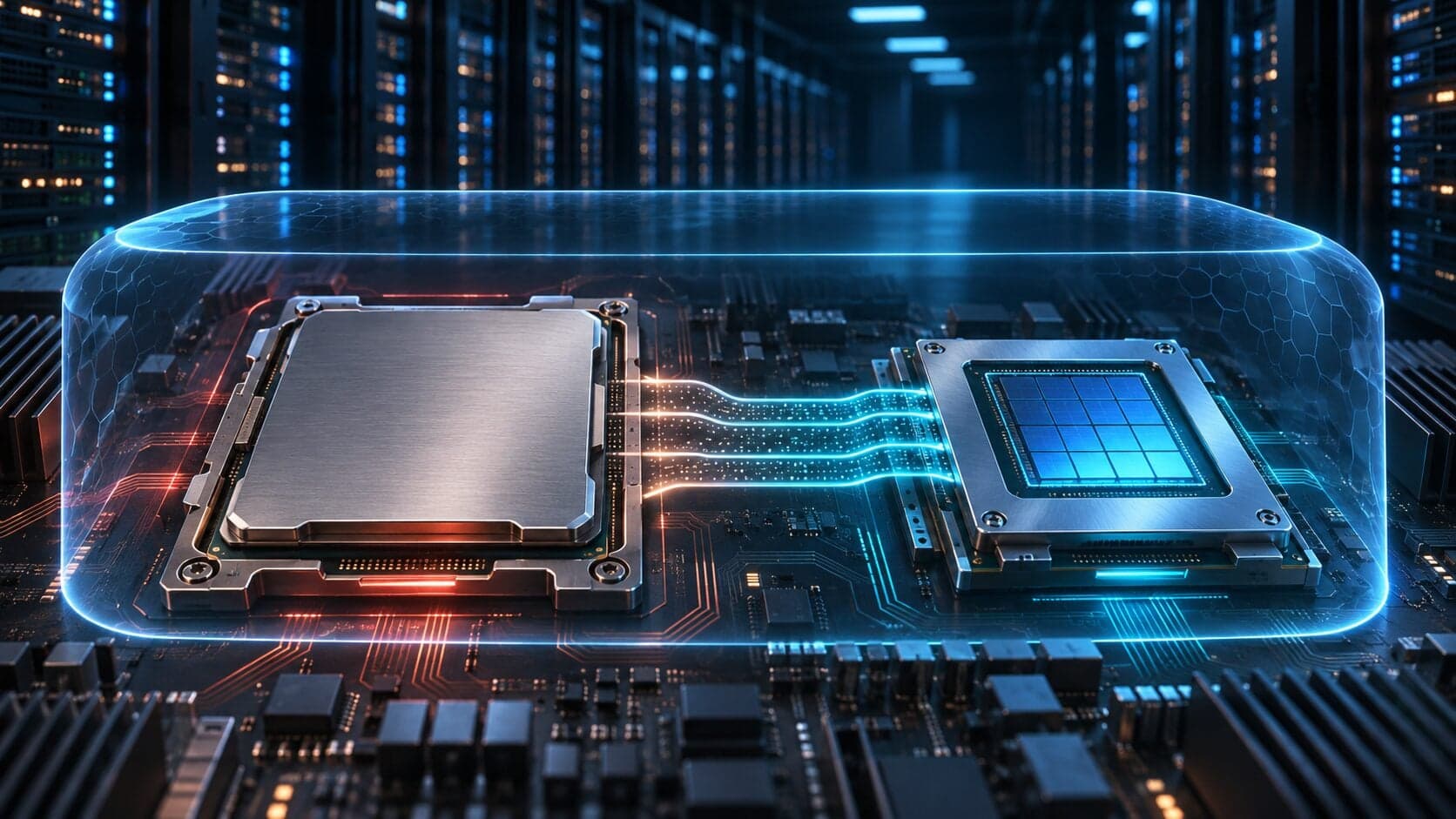
Meanwhile, the 8i Max combines two TPU chips within a single package to expand memory and throughput, catering to workloads that require large context windows, the volume of information an AI model can parse in a single prompt.
The product blitz signals an aggressive shift for Google, which previously updated its processor lineup every two years. Amin Vahdat, Google’s senior vice president and chief technologist for AI and Infrastructure, noted that industry demand is shifting rapidly from general-purpose silicon toward tailored systems.
“The future is going to be about specialization, and the upsides for specialization continue to be significant,” Vahdat said, adding that targeted hardware delivers superior value compared to one-size-fits-all alternatives.
Google originally designed TPUs over a decade ago alongside Broadcom Inc. to lower the computing costs of internal services like search. Today, direct sales of TPUs to outside customers are emerging as a major commercial engine. Bloomberg Intelligence estimates TPU sales, along with related hardware and software, will surge from approximately $12 billion this year to more than $135 billion by 2028, excluding sales to customers using TPUs through Google Cloud.
NVIDIA’s persistent supply constraints have opened a lucrative window for Google. Analysts estimate TPUs cost roughly 30% less than comparable NVIDIA GPUs while delivering competitive data throughput and improved power efficiency.
The value proposition has attracted major enterprise accounts. Oracle Corp. recently partnered with Google to offer TPUs across its cloud infrastructure. High-frequency trading firm Jump Trading uses thousands of the chips for model training and market research.
Leading generative AI developers are also betting heavily on the platform. Anthropic holds an option to buy up to $150 billion in TPUs through 2031, while OpenAI is also preparing orders.
Despite rapid growth, Google faces operational hurdles. High demand has outpaced supply, leaving current inventory fully contracted. To counter packaging and memory bottlenecks, the company is diversifying its supply chain beyond longtime partner Broadcom, pursuing agreements with firms such as Marvell Technology Inc.
Furthermore, competition is mounting as tech giants, venture-backed startups like Tenspresso, and even current customers OpenAI and Anthropic assemble veteran engineering teams to build custom silicon of their own.