Last week, Futurum announced its intent to acquire Enterprise Technology Research (ETR). This week, we’re launching Techstrong Semi.
On the surface, those may look like unrelated developments. One is an acquisition that adds one of the industry’s most respected sources of enterprise technology spending intelligence to Futurum. The other is a new media property focused on semiconductors. I see them as part of the same story.
For several years, we’ve been building toward a vision at Futurum. We believed the future of technology intelligence would look different from the way the industry has traditionally operated. Technology leaders no longer want news from one source, research from another, analyst insight from a third and market data from somewhere else entirely. They want a more complete picture. They want trusted information, expert analysis, real-world market signals and meaningful engagement with the people shaping the industries they care about.
That vision was a major reason Techstrong became part of Futurum. It is also one of the reasons we announced our intent to acquire ETR just last week. ETR brings one of the industry’s most respected sources of enterprise technology spending data and buying-intent intelligence. Combined with Futurum’s analyst expertise and Techstrong’s editorial, media and community capabilities, it helps create something that is increasingly rare in today’s market: a place where data, analysis and real-world experience come together to provide a deeper understanding of where technology markets are heading.
Which brings me to Techstrong Semi.
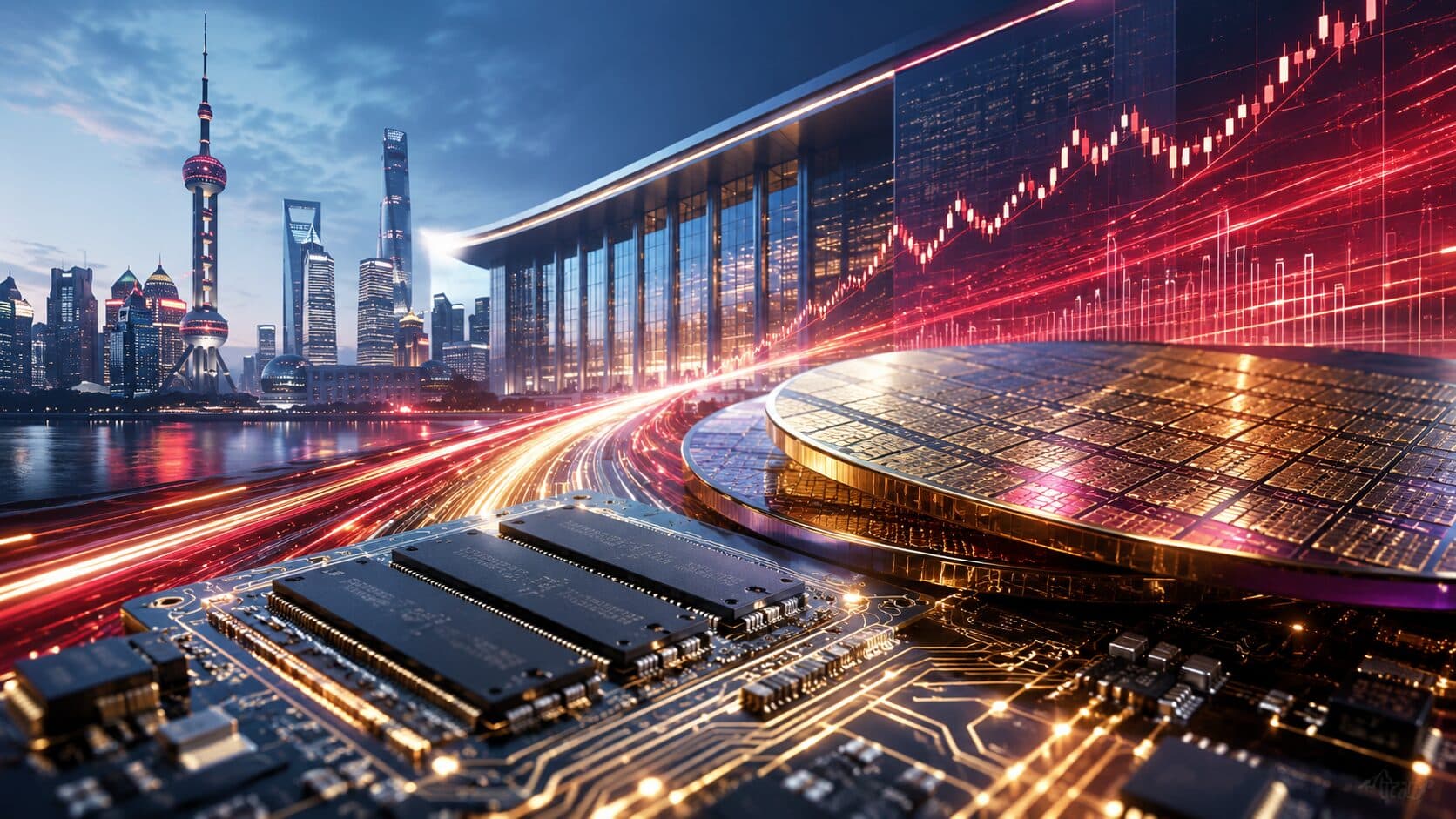
If there is one market that perfectly illustrates why this broader vision matters, it is semiconductors.
Not long ago, semiconductors occupied a relatively specialized corner of the technology industry. They were critically important, but for most business and technology leaders they remained largely behind the scenes. Chips powered the systems, networks and devices we depended on every day, but they rarely dominated strategic discussions outside of the companies that designed and manufactured them.
That has changed dramatically.
The rise of artificial intelligence has pulled semiconductors into the spotlight, but AI is really just the catalyst that exposed a larger reality. Semiconductors have become one of the foundational industries of the digital economy. They sit at the intersection of computing, networking, cloud infrastructure, data centers, energy consumption, supply chains and national competitiveness. Decisions being made by semiconductor companies today will influence the trajectory of nearly every major technology market tomorrow.
At Futurum, we have had a front-row seat to that transformation. Our analysts spend their time speaking with semiconductor executives, hyperscalers, cloud providers, enterprise technology buyers, investors and policymakers. Over the past several years, one observation has become increasingly difficult to ignore: the semiconductor industry has moved from being an important technology sector to becoming a foundational layer beneath almost every major technology trend.
One of the things I have learned throughout my career is that major technology shifts tend to reveal where the real leverage exists in the stack. During the cloud era, infrastructure became strategic. During the mobile era, platforms became strategic. In the AI era, semiconductors have emerged as one of the most important strategic layers in technology. The companies building the silicon that powers AI, cloud computing and next-generation infrastructure are increasingly shaping the future direction of the broader market.
That represents a significant shift from even a decade ago.
It also exposed a gap.
There are excellent publications focused on the engineering side of semiconductors. There are also excellent financial publications that cover the industry from an investor perspective. What has been missing is a destination that connects the technical, business, strategic and market dimensions of the semiconductor ecosystem in a way that serves technology leaders, practitioners, investors and decision-makers alike.
That is why we created Techstrong Semi.
The goal is not simply to report on yesterday’s announcements. We want to help readers understand what those announcements mean. We want to connect technology innovation to business outcomes. We want to explore how developments in manufacturing, packaging, memory, compute architectures and AI infrastructure influence the broader technology landscape.
This is where the combination of Futurum and Techstrong becomes particularly compelling.
Techstrong brings one of the most engaged technology audiences in the industry. It brings a respected editorial organization led by Mike Vizard. It brings Techstrong TV, educational programming, learning events and a practitioner community that spans virtually every major area of enterprise technology.
Futurum brings deep analyst expertise, market research, advisory services and relationships throughout the semiconductor, AI, cloud and enterprise technology ecosystems. Our analysts spend every day evaluating markets, technologies and competitive dynamics to help clients make smarter decisions.
The addition of ETR strengthens that foundation even further. One of the things that attracted us to ETR was its ability to provide forward-looking visibility into what technology buyers are planning to do, not simply what they have already done. In fast-moving markets, that perspective can be invaluable. Understanding future spending intentions often tells you more about where a market is heading than looking at where it has been.
Few industries benefit more from that multidimensional perspective than semiconductors.
Understanding the future of AI infrastructure requires more than tracking product launches. It requires understanding enterprise demand signals, cloud investment patterns, data center buildouts, energy requirements, supply-chain dynamics and the strategic priorities of technology buyers. No single report, analyst opinion or news article can tell that story on its own.
That is precisely why Techstrong Semi exists.
Readers will find original reporting, analyst perspectives, executive interviews, thought leadership, Techstrong TV programming and educational content focused on the technologies and companies shaping the semiconductor ecosystem. We will also offer premium content and research experiences for professionals who need deeper intelligence and analysis. As semiconductors become increasingly central to business and technology strategy, the demand for informed, actionable insight will only continue to grow.
Personally, I intend to be an active contributor to Techstrong Semi.
Not because semiconductors are the only market I cover, but because they increasingly influence every market I cover.
Whether I am analyzing artificial intelligence, enterprise technology spending, cloud infrastructure investments or emerging technology trends, semiconductors are part of the conversation. More often than not, they have become the foundation of the conversation.
The launch of Techstrong Semi is not simply the addition of another website to the Techstrong portfolio. It is an extension of the broader vision that brought Techstrong into Futurum and that continues to evolve through initiatives like the announced ETR acquisition. It reflects our belief that the future belongs to organizations capable of combining trusted journalism, expert analysis, actionable intelligence and engaged communities into something more valuable than any one of those capabilities could provide independently.
The semiconductor industry is entering one of the most consequential periods in its history. AI may be driving much of the attention today, but the forces reshaping semiconductors extend well beyond AI. The next decade of innovation in cloud computing, robotics, networking, autonomous systems, communications and enterprise technology will all be influenced by advances in silicon.
That conversation deserves a dedicated home.
Welcome to Techstrong Semi.