For most of the semiconductor era, the unit of competition was easy to identify. It was the chip.
A faster processor, more memory bandwidth or a better manufacturing node could move a market. System builders took those components and turned them into servers. Data center operators took the servers and assembled infrastructure.
AI is scrambling that order.
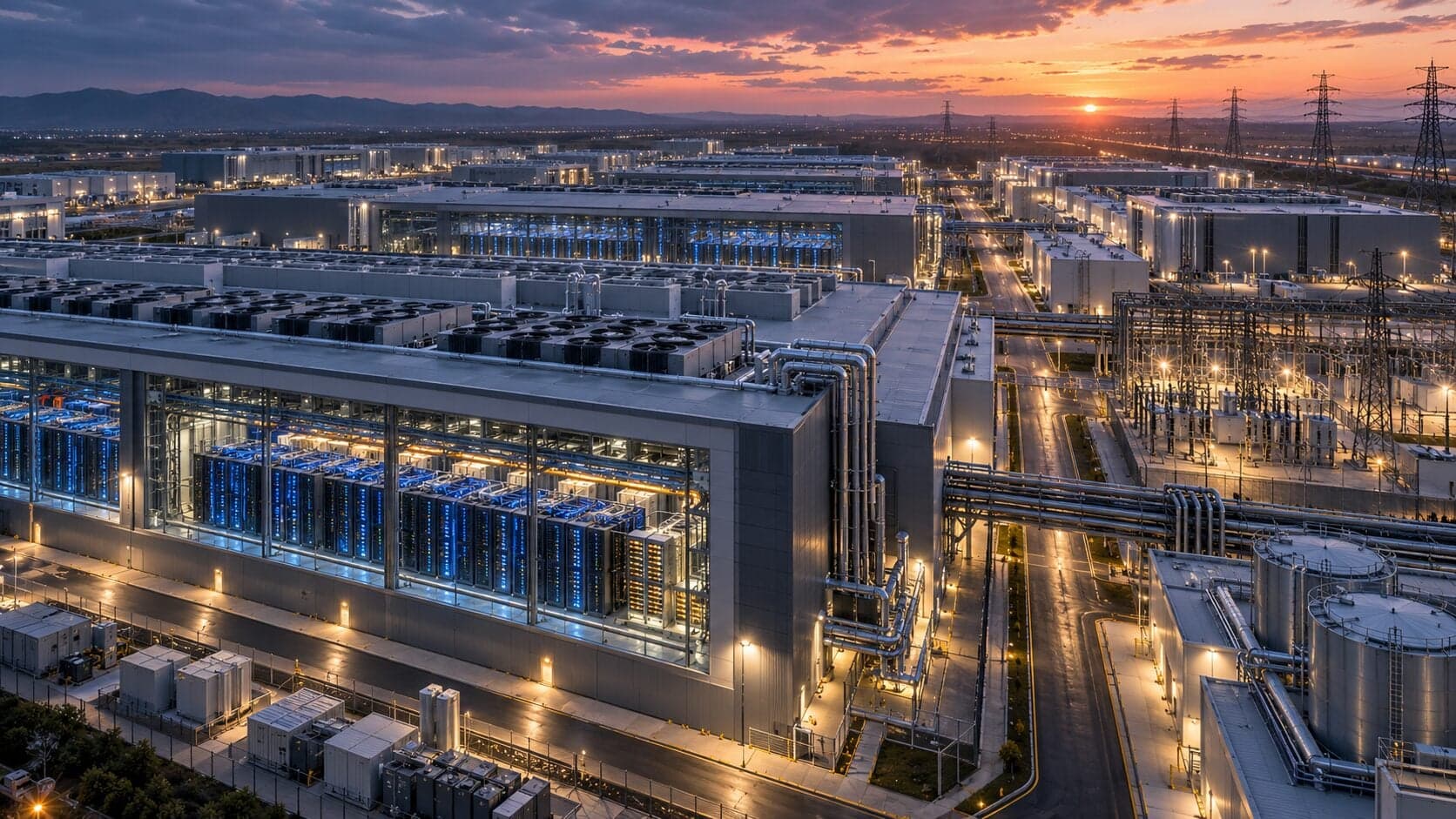
The performance that matters now is not the benchmark score of a single accelerator. It is how quickly a complete system can be installed, energized, cooled, networked and kept busy. A brilliant chip sitting in a partially commissioned data hall produces exactly zero tokens. That is why the semiconductor story is moving up the stack, from chips to servers, from servers to racks and from racks to entire clusters.
The Rack Becomes the System
Look at the direction of travel. NVIDIA moved from GPUs to boards, DGX systems, HGX platforms, rack-scale designs such as NVL72, SuperPODs and now the broader DSX architecture. AMD is answering with Helios and an explicitly open rack-scale approach. Hyperscalers are designing custom accelerators, networks and power systems around their own workloads.
This is not feature creep. It is a response to the physics of AI.
At rack scale, compute cannot be separated from high-bandwidth memory, optics, switching, power delivery, heat removal, firmware and management software. Change the accelerator and you may change the cooling loop. Change the network topology and you may change the cable map, rack layout and commissioning process. The interfaces have become as strategically important as the components.
In the Techstrong Special Report, The Data Center Supply Chain (DSC), we describe this as the unit of production moving up the stack. Chips are still essential, but the commercially meaningful product is increasingly a validated block of productive compute. Customers do not want a crate of impressive parts. They want a system that works at the promised performance, power density and availability.
Architecture is Becoming Market Power
This shift gives semiconductor vendors a new path to influence. The company that defines the reference rack can shape the server design, networking fabric, cooling requirements, power envelope, software layer and partner ecosystem around it.
NVIDIA’s DSX strategy points toward an asset-light version of that model. NVIDIA does not need to pour the concrete or own the cranes. It can define the architecture, validate the design in digital twins, certify the implementation and coordinate an ecosystem of equipment suppliers, builders, operators and capital providers.
That is a formidable position. It is also not the same thing as supplying a complete data center. The hard work of obtaining power, securing permits, building the facility and commissioning every subsystem remains distributed across the DSC.
The strategic question is who becomes the prime architect. If one company owns the interfaces and the acceptance criteria, it can capture value well beyond the silicon. It may, in effect, become the general contractor for the AI factory without employing the construction crew.
The Opportunity and the Trap
For the semiconductor industry, this creates opportunity across packaging, memory, networking, optics, copper, power electronics, liquid cooling and system integration. It also changes what customers should evaluate.
Peak performance matters, but so do utilization, deployability, serviceability and time to productive compute. An open component that takes months to integrate may be less valuable than a tightly engineered rack that can be repeated. On the other hand, a completely integrated architecture can create what we call the Indispensability Trap. Every layer fits beautifully, but switching suppliers becomes brutally expensive.
That tension will define the next phase of competition. NVIDIA’s integrated ecosystem, AMD’s open rack-scale strategy and hyperscaler-designed systems are not just different products. They are different theories about where control should sit in the AI infrastructure stack.
The winners may not be the companies that manufacture every part. They will be the companies that control a critical interface, deliver repeatable capacity and learn faster with every deployment.
Forget the old handoff from chip vendor to server maker. The rack is becoming the computer, the cluster is becoming the product and the data center is becoming the system. That is where the semiconductor action is moving next.
Read the full report: The Data Center Supply Chain (DSC)